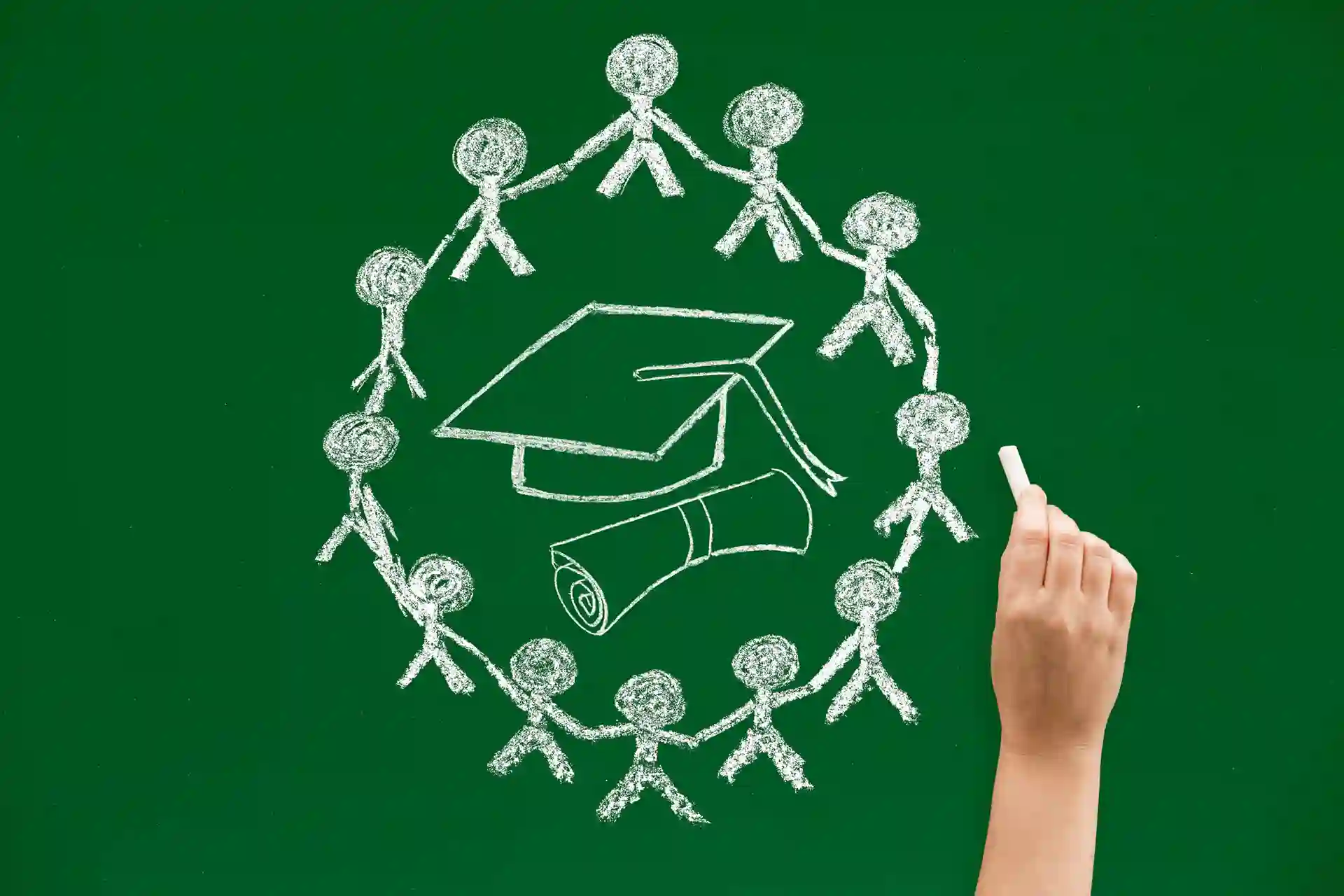
There’s a point, after the first week of classes, when going to school feels like the repetition of an infinite cycle. Of course, it’s great to see friends and teachers you’ve grown close to, but the system itself can sometimes be exhausting: routine, overly competitive. We start to lose sight of one of the most important things: curiosity. It may sound contradictory, because we’ve often been told that school is where we’ll find our vocation and passion, but at least in my case, it wasn’t like that.
The first days of class in high school were always when I felt the most motivation and excitement to go. I was eager to learn new things, to strengthen what I already understood. But very quickly, once I fell into the routine of listening for hours and hours to someone speaking, I started to feel like just a robot: wake, attend, absorb, repeat.
I’ve always believed that knowledge is fundamental, and I’ll never be against institutions that generate it. But it’s disheartening to realize how little the educational system has evolved around the world. I was talking to my mom recently about when she was in school, and it surprised me how similar her stories sound to what I experienced in high school. This is the paradox of October in schools: it’s both the moment when learning truly begins and the moment when many young people start to disengage.
The Invisible Curriculum
I’m currently studying engineering, and of course, I’ve used all the math and physics I learned in school! Learning science helps you build a systematic way of thinking that’s essential for solving complex problems. Math is important because it opens doors, builds understanding, and sharpens the mind. But there’s a question forming that the equation can’t answer: How do I hold all of this? The formulas and the feelings. The deadlines and the dreams. The world’s weight and my own becoming.
Our schools already hold immense wisdom: inquiry, discovery, the discipline of practice. They teach us how to dissect a poem, map the fall of empires, balance equations that explain the physical world. These are not trivial skills. Critical thinking, analytical reasoning, and disciplinary knowledge form the scaffolding upon which we build understanding.
Yet there’s another kind of knowledge that lives alongside these lessons, often unnamed and untaught: the emotional architecture of learning itself. How do we persist when something feels impossible? How do we process failure without letting it define us? How do we work together when conflict arises? How do we recognize when we need rest versus when we need to push through? How do we hold on to hope when the world feels overwhelming?
In my opinion, these aren’t just additional “soft skills.” They are the foundation that helps us face the world, take on responsibility, and create meaningful change in our lives and in those around us.
An exam can’t dictate how “intelligent” we are, only how well we prepared for a specific task. I remember classmates in high school being devastated because they missed their expected score by just two points. I’ve even seen friendships fall apart over quiz results.
How is that possible?!
I don’t think this helps us grow into the kind of leaders who will change the world.
It’s clear that we need a more comprehensive educational system, one where we don’t just learn to get perfect scores, but to accept imperfect ones knowing that’s okay. Where those “failures” become opportunities for improvement, reasons to awaken our curiosity and thrive.
Learning remains one of the most powerful acts we have, but maybe we’ve reduced it too much. It’s not just about understanding the world, but about understanding ourselves as we live in it. Not about memorizing theories, but about learning to hold our own questions. I want to believe in an education that teaches us to think, yes, but also to feel without fear.
The Inner Curriculum
Modern education seems to have separated something the human mind has always used together: reason and emotion. Maybe the mistake isn’t what we decided to teach, but what we decided wasn’t worth teaching. We learned to understand the world, but not to understand ourselves within it. Perhaps we got used to thinking that learning means accumulating external knowledge, and forgot that there’s also an inner kind of learning that can only come from within.
I vividly remember my first university interview. They asked me the question I feared most, the one I had practiced for weeks but still felt least prepared to answer:
—“Tell me, who is Luis Esteban?”
I froze. Of course I know who I am (I’ve been me all my life haha) but when a stranger throws that question like a bullet, anyone can stumble a bit. In that moment, I realized something deeper: I didn’t really know where I stood in the world I had been taught so much to describe.
I had spent more than a decade learning about the systems that move the world, but I had never stopped to think about how I moved within those systems. I’m not saying institutions should teach us who we are, but I do wonder why that question, the most essential one of all, appears so late in our lives.
Integrating reason and emotion doesn’t mean turning classes into self-help sessions. It means recognizing that thinking and feeling are two ways of knowing. That curiosity and introspection are twin engines of learning. An education that ignores either one ends up forming us only halfway.
My intention has never been to criticize institutions themselves, but the system. Of course, I don’t expect it to give us all the answers, but I do hope we’re given the tools to ask these kinds of questions. Maybe integrating knowledge and humanity isn’t an academic project, but a more honest way of learning to exist in the world.
The Stakes of This Moment
Young people today are growing up amid overlapping crises, climate instability, political polarization, economic uncertainty, mental health struggles, and rapid technological change that’s reshaping work, connection, and even truth. The world we’re inheriting is different from the one previous generations knew, and yet the educational system is still preparing us in the same way it prepared our parents.
This has deep implications for our generation. Youth mental health indicators have been declining for over a decade. Anxiety, depression, and burnout are now common experiences. My friends in college have told me they feel unprepared for adult life, despite years of formal education. In most cases, my friends and I feel unsure about how to navigate uncertainty, build meaningful relationships, find purpose, and maintain well-being while doing work that matters.
I don’t think this is a failure of young people. I think it’s a call for us to reimagine the world we live in.
The Work Ahead
The work of integrating intellectual and emotional education that keeps our curiosity alive is not easy! It means becoming more than competent workers, it means becoming young people ready to face the reality of life, to step out of our comfort zones, and to actively embrace different ways of thinking, systematic changes, and cultural shifts. We have to be willing to question our assumptions about what education means to us and to the world.
But it’s also work that’s already underway. Across the world, educators are innovating. Students are advocating for change. Communities are reimagining what schools could be. And organizations like YouthxYouth are building bridges between these efforts, amplifying youth leadership, and proving that transformation is possible.
I believe we already have ecosystems ready to evolve, and young people aren’t waiting for permission. It’s just a matter of realizing that we must let go of the past and embrace change. Our generation has to push forward to achieve the transformation we so urgently need.
Education will become what it was always meant to be: not just preparation for life, but life itself. Not just learning facts, but becoming fully human. Not just surviving routines, but using them as spaces for transformation.

Luis Acevedo
My name is Luis Acevedo (he/him), I am a 20 year-old from Colombia who strongly believes in the idea of education being the most crucial foundation of society. I'm a software engineering student and a fellow and resident at YouthxYouth. I care about building systems and sparking conversations that can actually make a difference in how we learn, connect, and create change in the world.
More by this Author%20(1).jpg)

Comments